Dr John Vrazas
Consultant Endovascular Specialist & Interventional Radiologist

Consultant Endovascular Specialist & Interventional Radiologist
Ovarian Vein Embolisation begins with an examination of the blood vessels using x-rays and contrast (x-ray dye). A specialist known as an Interventional Radiologist often performs these procedures. The contrast is injected through a thin plastic tube called a catheter, which is passed through a sheath inserted into the femoral vein. Abnormal incompetent ovarian and pelvic veins can then be treated by obstructing or occluding them, a process called embolisation.
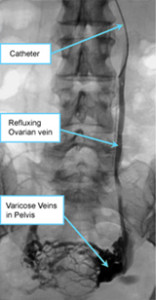
Ovarian vein embolisation is a minimally invasive treatment for pelvic congestion syndrome that is used to stop blood flow through incompetent veins so they can no longer enlarge with blood, thus relieving the pain.
Pelvic congestion syndrome, also known as ovarian vein reflux, is a painful condition resulting from the presence of varicose veins in the pelvis. The condition is caused by valves in the veins that help return blood to the heart against gravity becoming weakened and not closing properly, allowing blood to flow backwards and pool in the vein causing pressure and bulging veins.
The chronic pain that is associated with this disease is usually dull and aching. The pain is usually felt in the pelvis and lower back. Pelvic congestion syndrome is sometimes also called chronic pelvic pain.
The pain often increases during the following times:
Author: Dr John Vrazas MB, BS FRANZCR, EBIR, FACP, FCIRSE